
About Us
Blending clasroom learning with real-world applications, the program ensures that students can step out into the real world with medical experience, leadership foundations, and a strong sense of integrity.
Core Values
Guiding our program
-
As a team-based program, student trainers must learn to work with others, regardless if they’re like-minded or not, towards a shared common goal. Student trainers learn to understand and accomodate different-minded people by practicing open-communication and creating oppurtunities for everyone to contribute towards.
-
By building a supportive learning environment, student trainers learn to overcome the challenges they face and gain the confidence they need to make mistakes and try again.
-
Pride and Ownership is especially important to rising community-leaders. Taking accountability is one of the many ways the program encourages student trainers to be responsible and follow-through with their word.
Learning Outcomes
Medical Pathologies and Treatments (MED)
Pathophysiology and differential diagnosis are essential parts of medicine. Includes pharmacology, appearance and performance-enhancing drugs, and nutrition.
An exploration of the medical and legal foundation of the medical practice on the community-scale and on the national-scale. Including major laws and court opinions at the federal, state, and local levels. Along with an exploration of virtue ethics and ethical theories.
Medical Legal and Ethics (MLE)
Traumatic injuries are the most common conditions any provider may face. Bleeding control, bandaging, and maintaining oxygen are the cornerstones to medical practice. It encompasses shock indentification, scene management, and rehabilitation.

Trauma Pathologies and Treatments
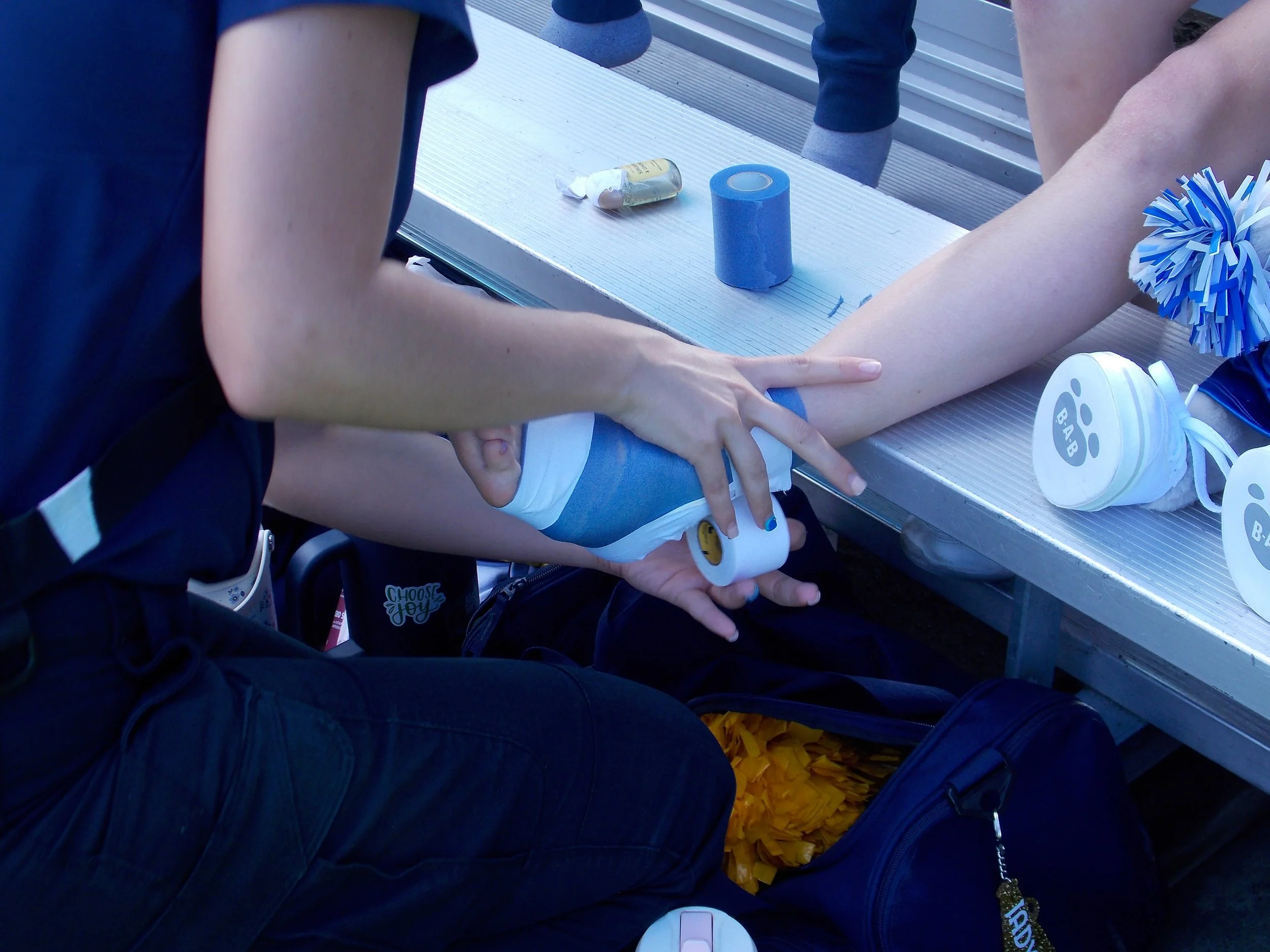
Student Trainers learn to provide the community with information to make better healthcare decisions just like a medical professional would. They also daily oversee practices and games of athletes to prevent injury and provide resources for athletes to improve their well-being.

Public Health (PBH)
Understanding the human body system at different scales and complexity levels. Also includes biochemical and fauna systems. Both combined to form Anatomy and Physiology, central to diagnosing.
Human Body Systems (SYS)
Develop a thorough understanding of the sports and events the program serves. Including impact forces and their impacts on the human body, targeted towards risk analysis. along with evaluation of each Sports Medicine student trainer in context of the sport or event.
Athletics, Kinematics, and Sidelines
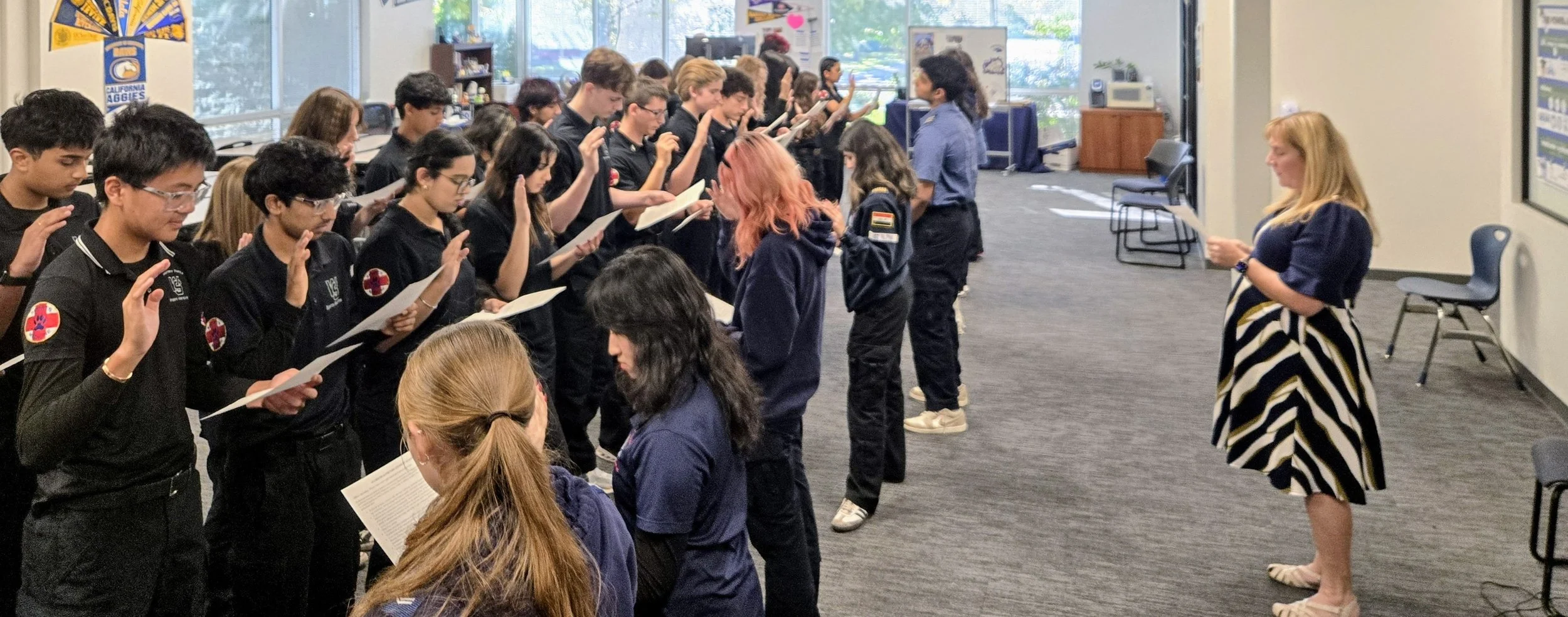
Medical Student Oath
Commitment towards making a difference.
Primum non Nocere
The Oath reinforces the program’s commitment to beneficence, non-maleficence, and autonomy. It is the program’s allied heath version of the Hippocratic Oath as future providers. Providing student trainers a moral light to guide and keep on an educational and moral journey.
We pledge that as we learn, we will first do no harm.